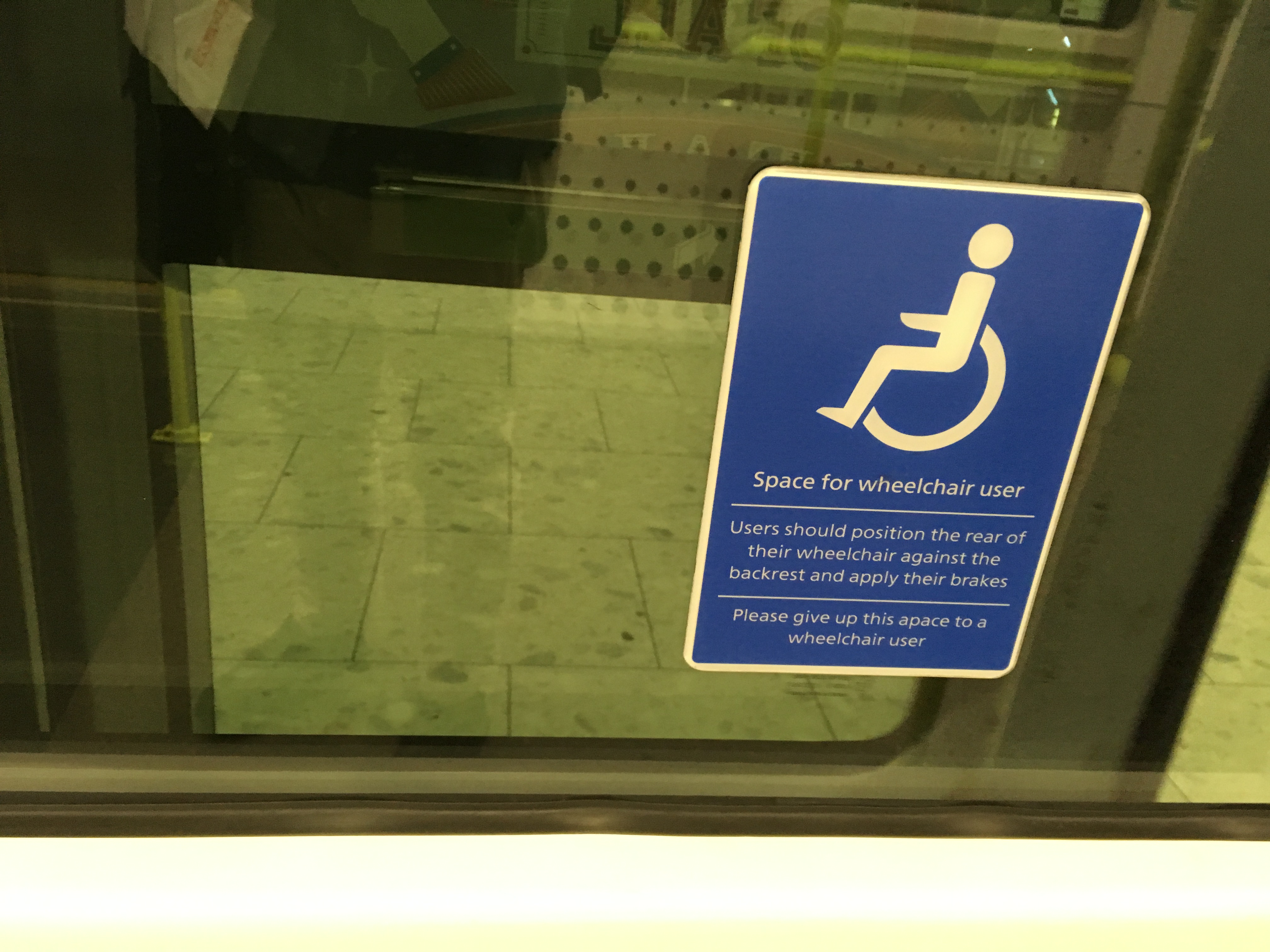
Photo: Eric Fischer · CC BY 2.0. Image unchanged.
Protecting wheelchairs before departure
The United Kingdom’s Aviation Accessibility Implementation Group published its progress report on 19 October 2026. Airlines, airports and accessibility specialists are working on wheelchair handling, staff training and the information passengers need throughout a flight journey. For someone who depends on a wheelchair, damage during transport can disrupt daily life long after a journey ends.
A standardised form introduced in March 2026 lets passengers share battery and handling information before travelling. It is an existing part of the work covered by the October update. Better information is intended to help staff prepare for transporting equipment and reduce the risk of damage.
Aviation Services UK’s Electric Mobility Aid Air Travel Pack combines a traveller guide, a technical form and battery information. Passengers can record a device’s dimensions, weight, adjustment features and removable components, then save or print the information. The pack also explains the battery documentation to obtain from manufacturers. Airlines may still require their own forms; the pack helps organise the details they need.
Training moves towards implementation
The group has reviewed baseline, intermediate and advanced training content and identified the needs of different staff roles. Developing a shared syllabus and materials is a priority for its second year, with contributions from trainers who have lived experience of disability. The proposed resources are intended to complement operators’ existing programmes.
Individual airports have already introduced changes. London Gatwick produced a disability training video in 2025 to bring passengers’ experiences into staff learning. Luton has introduced detailed accessibility maps and materials for people making their way through the airport independently.
A platform to be tested
A proposed digital platform would help booking agents, airlines and airport teams exchange more detailed information about a passenger’s access needs. The next step is to develop and test a proof of concept in a working aviation setting. Funding and delivery arrangements still need further work, and the report gives no firm timetable for wider availability.
The test is intended to establish whether the system can support a more individual service. The group also calls for future progress to be assessed through completed implementation and measurable improvements for passengers.
Proposed changes to compensation
The Civil Aviation Bill is proceeding separately through Parliament. It would give the Civil Aviation Authority stronger enforcement powers, including fines for airlines and airports that fail to meet passenger obligations. These are proposed powers, with the legislation still under parliamentary consideration.
On 20 October, MPs examined a provision to remove the compensation cap for wheelchairs and other assistive devices lost, damaged or destroyed on domestic UK flights. The proposed change is limited to those flights. Extending it to international journeys would require changes to the Montreal Convention, as transport minister Keir Mather explained during the committee debate.
Sources
- Stronger safeguards for wheelchair users and better-trained staff to support disabled air passengers (2026-10-19)
- 2026 Aviation Accessibility Implementation Group Annual Report (2026-10-19)
- Aviation Accessibility Implementation Group update (2026-10-19)
- Electric Mobility Aid – Air Travel Pack
- New laws set to modernise aviation and better protect passengers (2026-06-02)
- Civil Aviation (Consumer Protection and Regulatory Reform) Bill [Lords], Public Bill Committee, 20 October 2026 (2026-10-20)
More international news
Who decides at home? Australian report calls for more control over supported living