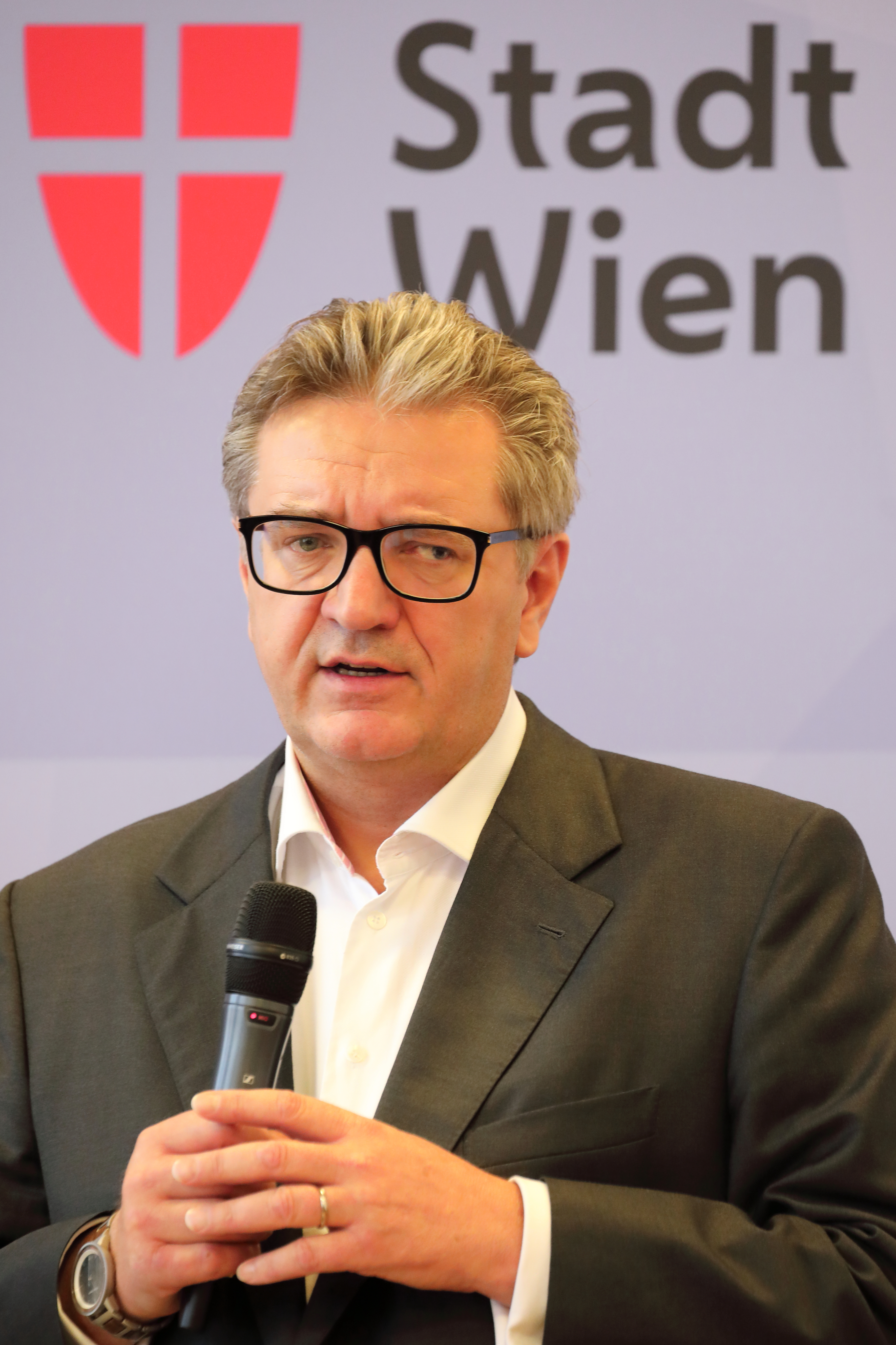

Parliament discussed how payments are counted
The discussion followed a question by Green Party member David Ellensohn. He asked how many applications for benefits under Vienna's minimum-income legislation had been rejected or discontinued since the fund began. The published session report records Hacker's distinction between monthly payments and one-off initial assistance.
Hacker explained that federal law requires the recurring payments to be taken into account and that MA 40 must implement this requirement. Vienna also provides additional information to help people apply. The available report does not give a number of rejected or discontinued minimum-income benefits.
What the fund is intended to cover
The fund has existed since 1 July 2026. It is intended to close gaps where children cannot receive maintenance, advance maintenance payments or survivors' benefits. It covers, for example, families where the parent required to pay maintenance cannot pay or cannot be located. It also includes cases in which child maintenance was not pursued because of violence, and cases where survivors' benefits are unavailable because the qualifying period has not been met.
In 2026, the standard monthly support is €240.60 per child, paid twelve times a year. Children who have lost one parent and have no entitlement to survivors' benefits can receive fourteen payments. People affected by violence may also receive one-off initial assistance of up to €4,000 if needed. Approval requires the relevant conditions to be met.
Monthly payments and initial assistance are treated differently
The federal transparency portal confirms the distinction Hacker raised in parliament: recurring payments from the fund count towards social assistance. The one-off initial assistance for single parents affected by violence is exempt. People already receiving minimum-income support should therefore not automatically regard the full monthly payment as additional disposable income. Household budgeting depends on how the two benefits interact. The amount stated in the fund's approval notice does not by itself show the total income available.
The initial assistance serves a specific purpose. The Ministry of Social Affairs explains that it can help pay for housing, necessary documents or other expenses involved in making a safe new start. It therefore addresses a different situation from the regular financial support of a child.
Income, shared household and age
Requirements include a shared principal residence in Austria and the relevant residence status. In 2026, the standard income limit is €2,768 net per month. Reduced support may be available when this limit is exceeded by less than €460. Care allowance, disability-related benefits and family allowance are excluded from this income calculation.
The standard age limit is the child's eighteenth birthday. The ministry lists exceptions: support may continue until the nineteenth birthday where school or vocational education is being actively pursued. Another exception concerns children with a physical or intellectual disability expected to be permanent who consequently cannot support themselves.
How to apply for support
Applications can be submitted to Sozialministeriumservice by email, post or in person; online applications are still described as forthcoming. The application form, an additional sheet for further children and guidance on completing the forms are available there.
Support may be granted from the month of application. Approval lasts for no more than twelve months, after which a new application is possible. A separate income assessment may be waived for people receiving social assistance or minimum-income support. This exemption is distinct from counting the fund's monthly payment towards social assistance.
Sources and further reading
- Stadt Wien – Kommunikation und Medien: 15. Wiener Landtag (1) (2026-10-20)
- Sozialministeriumservice: Unterstützungsfonds für Alleinerziehende
- Bundesministerium für Arbeit, Soziales, Gesundheit, Pflege und Konsumentenschutz: Unterstützungsfonds für Alleinerziehende: Voraussetzungen und Fragen
- Transparenzportal des Bundes: Unterstützungsfonds für Alleinerziehende – monatliche Leistungen und Starthilfe